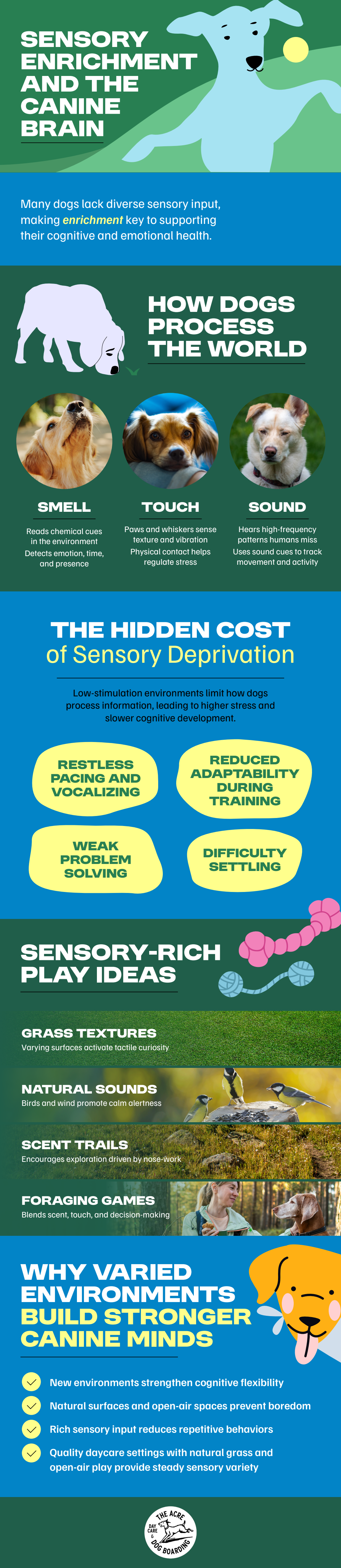

Sensory enrichment plays a critical role in how dogs think, learn, and adapt to their surroundings. A dog’s brain processes information through smell, sight, sound, touch, and movement, shaping behavior and emotional balance. When these senses are engaged in healthy ways, dogs show better focus, reduced stress, and improved problem-solving. Thoughtful enrichment supports mental health just as exercise supports physical fitness, especially for dogs living in structured home environments.
How the Canine Brain Responds to Stimulation
The canine brain is wired to explore and interpret constant input. Scent games activate memory and decision-making centers, while visual challenges encourage attention control. Sounds, including everyday household noise, help dogs learn patterns and predict outcomes. Physical textures underfoot also provide feedback that supports coordination. Without regular stimulation, dogs may develop frustration or anxiety, which often appears as restlessness or destructive habits.
Smell Work, Play, and Cognitive Growth
Smell-based activities are especially powerful because scent is a dog’s strongest sense. Simple practices like hiding treats or rotating toys encourage curiosity and mental effort. Play that involves choice and problem-solving builds confidence and adaptability. These activities support emotional regulation and help dogs recover from daily stressors. Even short sessions can create meaningful engagement without requiring large amounts of space.
Environment, Routine, and Professional Support
Consistency helps the canine brain feel secure while still allowing variety. Rotating enrichment tools, adjusting walking routes, and providing calm rest periods create balance. Some owners rely on a trusted dog care center to add structured stimulation through social interaction and guided activities. These environments offer supervised challenges that promote learning while reinforcing positive behavior patterns.
Daily Enrichment for Different Life Stages
Puppies benefit from gentle exposure to new textures and sounds, while adult dogs need challenges that prevent mental stagnation. Senior dogs gain comfort from familiar routines paired with light novelty. Adjusting enrichment based on age and ability helps protect cognitive function and keeps learning enjoyable without creating unnecessary strain. This approach also supports mobility, confidence, and positive engagement across changing energy levels over time periods.
Supporting the canine brain through sensory enrichment improves behavior, resilience, and overall well-being. Dogs that regularly engage their senses are often calmer, more confident, and better prepared for change. Enrichment does not require complex tools or long sessions, only intention and consistency. By offering varied sensory experiences, owners help dogs thrive mentally and emotionally throughout every stage of life. Check out the infographic below to learn more.